
My December Reading
I finished out the year MOSTLY on a high note.

As I try to do each month, below is a small discussion of the books I read last month. Mostly, they were really good!
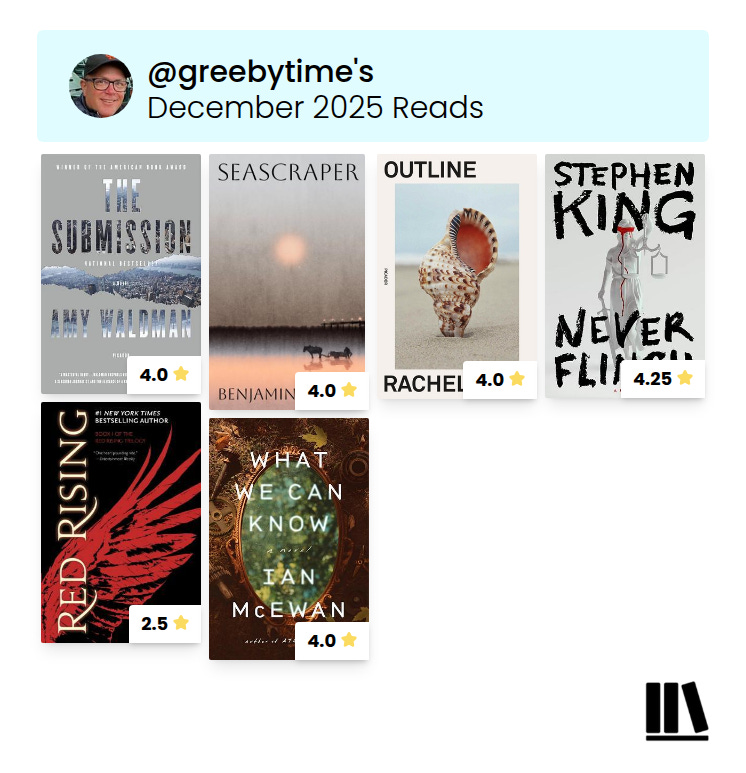
One thing I did in December was to look through my Kindle and try to start reading books I bought (or got otherwise) long enough ago that they never show up when I’m scrolling in the device to look for a new read. That led me to reading both The Submission by Amy Waldman and Outline by Rachel Cusk. Both were 4-star reads for me, and I’m hoping to continue to clear out these books and make my digital library a bit more manageable.
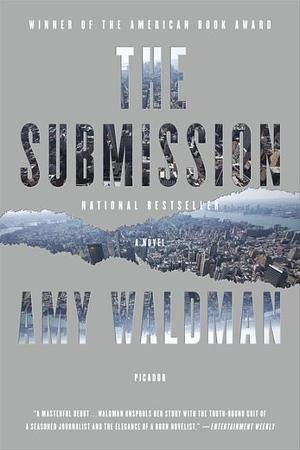
The Submission focuses on a group of people in Manhattan going through options for a memorial to honor the victims of a terrorist attack similar to 9/11. The group is comprised of relatives of some of the victims as well as other folks with interests in the effort. They do a blind review of all the submissions, meaning they do not know who the artist is … and they select one from someone who happens to be Muslim. Havoc ensues. It’s really well done and while some of the dialogue can feel a bit forced and over the top, it certainly isn’t nearly the nonsense we see almost every day in similar instances. I really enjoyed this one, and it took way too long for me to get to it.
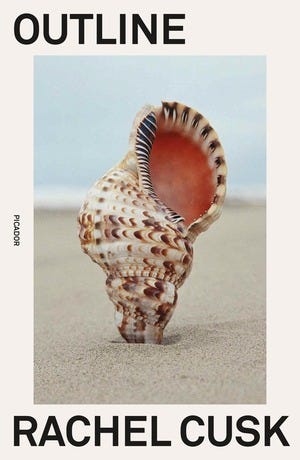
Similarly, I’m glad I finally read Outline by Rachel Cusk. It starts with two strangers meeting on a plane. One is an older man, another a woman maybe a decade or two younger who is dealing with the grief from her mothers death and her failed marriage. In vignettes that follow and almost don’t feel related, we see her processing all of this, going sailing with the man she met on the plane, etc. It’s an incredibly subtle novel, and the first of a three book series that follows the main character through the next part of her life. I’m not entirely sure if I’ll read those, but I did enjoy this one.
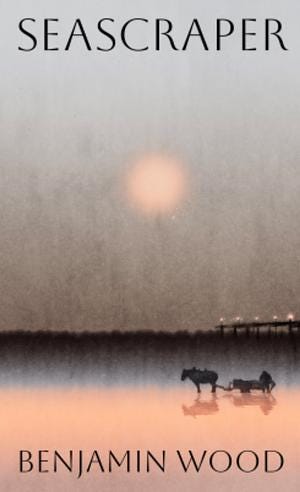
Seascraper, by Benjamin Wood, started to show up on award lists for 2025 and piqued my interest (and the fact that it was under 200 pages). It tells the story of a quiet man who lives and works in an English seaside town years ago, who makes a living scraping the coast for shrimp. It’s incredibly laborious and dangerous, but it’s life. Along the way, he meets a visitor from America who is scoping out locations for a Hollywood film and offers him $100 - presumably, a huge amount of money at this time and place - to be a location scout for him. Some drama certainly ensues and there is enough of a plot to really keep ones interest. It’s a very small story but beautifully written. Well worth the read. Rating: 4.0 out of 5.0 stars
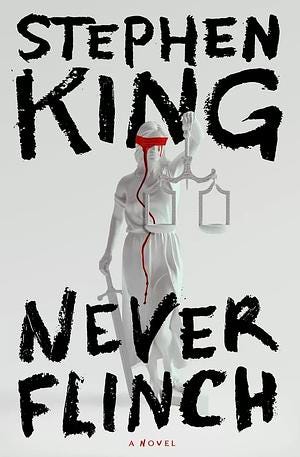
With three pretty literary books above, it might be a bit weird that my highest rated book this month was Never Flinch, by Stephen King, but so be it. The fourth book in the Holly Gibney series, this follows two tracks - one, a woman on a press tour who is aggressively feminist and being targeted by a far-right madman … and another madman enacting revenge for a man who died in prison after being convicted for a crime he didn’t commit. These two plots converge in a really clever way and it ends up being one of the best books in this great new series. Rating: 4.25 stars out of 5.0
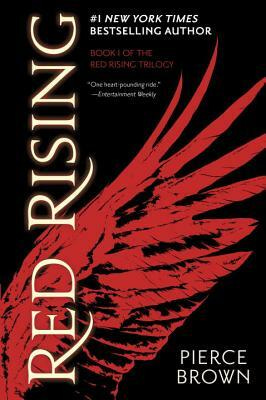
On the flip side, my least favorite book was Red Rising by Pierce Brown. I’d heard about this book/series for years and while I’m not a huge fantasy or science fiction guy, I realized also that I read more of it than I think I do. My sister-in-law had it on her shelf so I borrowed it and … it was fine. There’s a TON of world-building which is necessary because apparently this is a seven book series and let me be clear - I’m not going to read any more of them. I’ve seen a lot of chatter that “the first book is the worst, you have to keep going.” No, no I do not. I heard the same thing about Ender’s Game, a book I felt was not nearly as interesting as those who love it do, and I never kept reading. I know I will sleep soundly without finding out how this series ends. (Though I’m equally sure it will be a movie or series, and hey, I might watch.) Rating: 2.5 stars out of 5.0
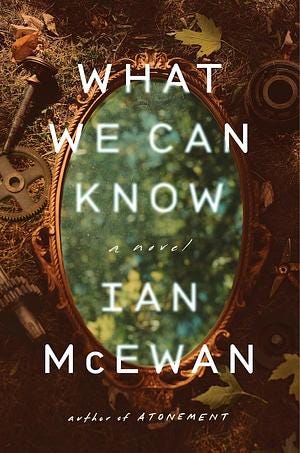
The last book I finished in 2025 was What We Can Know by Ian McEwan. Despite reading a lot of literary fiction, McEwan and I have never really clicked. (Apparently, I stopped reading Atonement about two pages before the major plot device occurred, but I haven’t ever gone back to give it another chance.) This is a really clever novel, taking place (or is it?) in two timelines. One, about ten years ago in 2014 where a noted poet reads aloud a poem dedicated to his wife at a party. It is called “A Corona for Vivien,” and it becomes famous not only for its supposed brilliance but because no copies of it have survived. This is because the second timeline takes place 100 years in the future after massive climate changes - some due to a nuclear incident, some due to climate change in general - and we meet a researcher who has set upon trying to find the poem. While this doesn’t really sound like the most exciting story, it is especially well done and has more twists and turns than I expected. I might have to start reading a few more books by McEwan. Rating: 4.0 stars out of 5.0
That’ll do it for my 2025 reading. We’re off to a slower start this month but so far, so good.
What books did you read or want to recommend?
I’m still amazed at how many books you get through in a year. I have just started wanting to pick up Steven King novels, besides his nonfiction book about writing which I loved, and The Green Mile and some shorts I haven’t read much of him. Some of it is due to other books that were more prominent for my program and then other writers I know who have successfully published novels. Now that I finished one of my own, I’ve been trying to be more of the classics.
I love seeing what you read and reading your takes on them.